

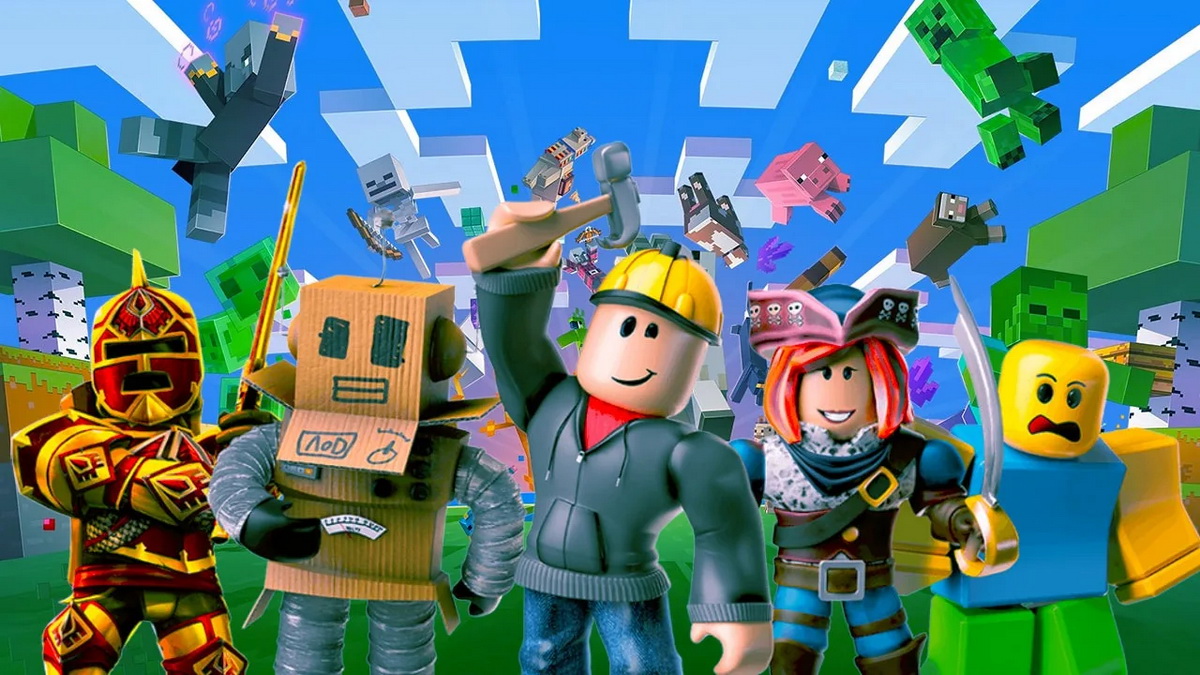

1. Minecraft Gives You Something Most Games Never Can—A World That Truly Feels Like Your Own
Most games introduce players to a carefully designed world with a clear objective and a fixed ending. Minecraft takes a completely different approach. From the moment you spawn, there are no lengthy tutorials telling you where to go or scripted quests demanding your attention. You're simply dropped into an unfamiliar landscape and left to decide what kind of adventure you want to create.
That freedom can feel intimidating during the first few hours. I still remember scrambling to gather wood before sunset, throwing together a tiny dirt shelter, and nervously waiting for the night to pass while zombies and skeletons wandered outside. Nothing about that experience was cinematic, yet it remains one of my favorite gaming memories because every decision was entirely my own.
As the hours pass, Minecraft slowly transforms. What begins as a survival challenge gradually becomes a personal project. A small shelter turns into a house, the house expands into a village, and eventually entire landscapes are reshaped through countless hours of planning and creativity. Unlike traditional games where progress is measured through story missions or character levels, Minecraft measures progress by the world you've built and the problems you've solved along the way.
That's what makes the game so emotionally rewarding. Every structure represents time, effort, and experimentation. Every farm reflects lessons learned from earlier mistakes. Even abandoned mines and unfinished buildings tell stories about previous adventures. Instead of simply playing through someone else's vision, you're constantly creating a world that feels uniquely yours. It's a simple concept, but after all these years, very few games have managed to capture that feeling as successfully as Minecraft.
2. Survival Starts Simple, but the Real Challenge Is Learning to Think Ahead
Minecraft's survival mode looks deceptively straightforward at first. Gather wood, craft basic tools, find food, and build a shelter before night falls. Those early objectives are easy enough to understand, which is one reason the game remains accessible to players of every age. What surprised me most, however, was how quickly survival stopped being about staying alive and started becoming an exercise in planning for the future.
During my first world, I built everything wherever it happened to fit. Chests were scattered across multiple buildings, crafting stations sat in random corners, and farms expanded without any real organization. It worked for a while, but after several hours, even simple tasks became frustrating because I spent more time searching for resources than actually building. Starting a second world completely changed my perspective. Instead of reacting to problems, I planned for them. Storage stayed centralized, farms were positioned close together, and transportation routes connected important areas from the very beginning.
That shift completely transformed the experience. Minecraft quietly rewards players who think beyond immediate survival. A well-designed food farm saves hours of gathering later. Organizing resources early prevents unnecessary backtracking, while preparing backup equipment before major expeditions makes dangerous exploration far less stressful. None of these systems are mandatory, yet the game naturally encourages smarter decisions by making every improvement feel meaningful.
It's a design philosophy that rarely calls attention to itself, but it's incredibly effective. Minecraft never tells you the best way to build your world. Instead, it allows mistakes to become lessons, rewarding patience and preparation more than rushing ahead. Long before reaching the End or defeating powerful enemies, many players discover that the most satisfying part of survival isn't overcoming danger—it's creating systems that make future challenges easier to solve.

3. Every Build Tells a Story, Which Is Why No Two Minecraft Worlds Ever Feel the Same
One of Minecraft's greatest strengths is that it transforms ordinary construction into personal storytelling. Unlike games where buildings exist only as functional upgrades, every structure in Minecraft reflects a moment in the player's journey. Looking back at an old survival world often feels less like revisiting a save file and more like reading a diary built from blocks.
I still remember the tiny wooden cabin I constructed during my first week of playing. By today's standards it was cramped, poorly lit, and awkwardly designed, but I could never bring myself to replace it. That little house marked the point where I finally understood the rhythm of survival. Nearby stood an unfinished bridge abandoned halfway through construction after I became distracted by exploring a cave system. Years later, those imperfect projects remain far more memorable than many technically impressive builds I've created since.
As worlds expand, they naturally become records of player growth. Early shelters evolve into sprawling villages. Simple crop fields develop into automated farming systems. Temporary pathways eventually turn into rail networks, Nether highways, or elaborate transportation hubs connecting distant regions. Every improvement reflects increasing confidence and a deeper understanding of the game's mechanics.
Interestingly, the most memorable Minecraft worlds are rarely the most beautiful ones. Instead, they're the worlds filled with history. Each scar left by a Creeper explosion, every abandoned mine, and every unfinished tower reminds you of a different chapter in your adventure. Those details create an emotional attachment that scripted narratives struggle to replicate because the story belongs entirely to the player. Minecraft doesn't simply let you build impressive structures—it lets you build memories that become inseparable from the world itself.
4. Minecraft Rewards Smart Planning Far More Than Fast Progress
One of the biggest misconceptions about Minecraft is that success depends on how quickly you acquire diamonds or defeat the Ender Dragon. Those milestones certainly matter, but experienced players know they're only a small part of the journey. The worlds that survive for hundreds of hours aren't built by rushing toward the endgame—they're built through careful planning and gradually improving the systems that support everything else.
I learned this lesson after starting several survival worlds over the years. In my earliest saves, I focused almost entirely on gathering rare resources. I explored dangerous caves with barely enough equipment, carried all of my valuables at once, and often lost hours of progress because I underestimated a lava pool or an unexpected group of hostile mobs. Eventually, I realized veteran players approached the game very differently. Before taking major risks, they prepared backup armor, stocked emergency supplies, organized storage, and built reliable farms that could quickly replace lost resources.
That mindset changes the pace of the entire game. Instead of constantly recovering from mistakes, you spend more time expanding your world. Building transportation networks, establishing renewable food sources, and creating efficient storage systems may not look exciting compared to discovering ancient cities or battling powerful enemies, but those foundations make every future project easier to complete.
Minecraft quietly encourages this type of long-term thinking without ever forcing it. Players who invest time in preparation are rewarded with smoother progression, fewer frustrating setbacks, and far greater creative freedom later. It's a subtle design philosophy, yet it's one of the reasons the game remains so satisfying after hundreds of hours. Success doesn't come from rushing ahead—it comes from building a world that's ready for whatever challenge comes next.

5. Exploration Never Truly Ends Because Every World Keeps Offering New Possibilities
Many open-world games eventually reach a point where exploration loses its excitement. Once every region has been visited and every collectible has been found, the sense of discovery begins to fade. Minecraft avoids that problem remarkably well because exploration isn't limited to uncovering new locations—it's also about finding better ideas, more efficient designs, and fresh ways to shape the world around you.
Some of my favorite Minecraft memories came from setting out with no particular destination in mind. I would leave my base intending to gather a few resources and return home hours later after discovering a mountain range perfect for a future castle, a village worth connecting with a railway, or an underground cave system that stretched far beyond anything I expected. Those unplanned adventures often became the foundation for entirely new projects.
The game's constantly expanding collection of biomes, structures, and underground environments adds even more variety to exploration. Every journey has the potential to uncover valuable resources, inspire ambitious building ideas, or simply provide a breathtaking landscape worth preserving. Even familiar terrain can feel completely different depending on the weather, time of day, or the perspective from which you first encounter it.
Perhaps that's why Minecraft remains endlessly replayable. Exploration isn't simply about checking locations off a map. It's about discovering opportunities. Every mountain can become a fortress, every coastline can transform into a bustling harbor, and every empty field might one day support a sprawling village. As long as your imagination continues growing, the world always feels larger than it did the day before.
6. Minecraft's Greatest Achievement Is Turning Creativity Into Long-Term Motivation
Most games eventually run out of meaningful goals. Once the campaign ends or the strongest equipment has been unlocked, many players naturally move on to something new. Minecraft works differently because the game never decides when your adventure is complete. Instead, every finished project usually inspires an even bigger one.
I've experienced this countless times. What started as a simple survival base gradually became a fortified village. After finishing the village, I wanted a railway connecting nearby biomes. That railway eventually expanded into a Nether transportation network, which then inspired automated farms to supply larger building projects. None of these goals were assigned by the game. They emerged naturally as the world continued evolving.
That's one of Minecraft's most remarkable design strengths. Rather than pushing players toward a fixed destination, it constantly encourages experimentation. A failed redstone machine becomes an opportunity to learn. An unfinished castle becomes motivation to improve building techniques. Even small quality-of-life upgrades, like reorganizing storage or redesigning farms, can make an old world feel exciting again.
The interconnected nature of every system also keeps progression satisfying. Better farms provide more resources for exploration. Exploration uncovers rare materials that improve construction. Improved transportation makes future expansion faster, while automation frees up time for larger creative projects. Every improvement strengthens another part of the world, creating a progression loop that rarely feels repetitive.
That flexibility explains why so many players spend hundreds—or even thousands—of hours in the same survival world. Minecraft isn't simply rewarding creativity. It continuously creates new reasons to be creative, ensuring that each accomplishment naturally leads to another ambitious idea waiting just over the horizon.

7. Few Games Balance Relaxation, Challenge, and Replayability as Well as Minecraft
One reason Minecraft has remained relevant for more than a decade is its ability to adapt to different moods. Some evenings I log in looking for a challenge, preparing for dangerous expeditions into ancient cities or the Nether. On other days, I spend hours quietly expanding a village, organizing storage rooms, or decorating a house without ever encountering serious danger. Very few games transition between those extremes as naturally.
That balance is part of what makes Minecraft feel timeless. Moments of tension are followed by periods of calm, allowing players to recover before choosing their next objective. After surviving an intense cave expedition with valuable resources, simply returning home and expanding a farm can feel surprisingly satisfying. The game understands that constant pressure isn't necessary to maintain engagement.
Replayability also comes from the fact that no two worlds ever develop in exactly the same way. Different seeds generate unique landscapes, player decisions shape progression, and personal creativity ensures every long-term project feels distinct. Even when starting over from scratch, I rarely repeat the same building style or exploration route because each new world encourages different possibilities.
Minecraft also continues benefiting from an enormous community that constantly shares building techniques, survival challenges, technical creations, and creative inspiration. Watching another player's project often sparks ideas for your own world rather than making your accomplishments feel less meaningful. That ongoing exchange of creativity helps keep the game fresh long after you've mastered its basic mechanics.
For many players, Minecraft eventually becomes less about reaching the end and more about enjoying the process itself. That's a difficult balance for any sandbox game to achieve, yet Minecraft continues doing it better than almost anyone else.
8. Is Minecraft Still Worth Playing in 2026? Without Question
Very few games remain relevant for more than a decade, yet Minecraft continues attracting both new players and longtime veterans with remarkable consistency. After hundreds of hours spent building cities, exploring dangerous caves, experimenting with redstone, and restarting countless survival worlds, I still find myself returning for one simple reason: no two adventures ever feel exactly the same.
Minecraft succeeds because it never limits players to a single definition of success. Some people spend years creating breathtaking architectural projects. Others dedicate themselves to mastering Hardcore mode, designing automated farms, or exploring every corner of an endless world. Even players with completely different goals can enjoy the same world together, each contributing something unique. That flexibility gives Minecraft a longevity that very few sandbox games have managed to achieve.
Of course, the game isn't perfect. New players may initially feel overwhelmed by its lack of direction, while others might mistake its simple graphics for a lack of depth. In reality, those minimalist visuals allow the gameplay itself to take center stage. The freedom to build, experiment, fail, and improve becomes far more important than graphical realism. Once you understand that philosophy, it's easy to see why millions of players continue returning year after year.
What impresses me most isn't Minecraft's endless content—it's the way the game rewards patience, creativity, and curiosity. Every world becomes a reflection of the person who built it, filled with memories that no scripted campaign could ever recreate. Whether you're surviving your very first night or expanding a world you've played for hundreds of hours, Minecraft still offers one of the most rewarding sandbox experiences available in gaming. It's not just a game you play—it's a world that grows alongside you.

Conclusion
Minecraft has never relied on cinematic storytelling or cutting-edge graphics to become one of the most influential games ever made. Instead, it empowers players to create their own adventures through exploration, creativity, survival, and imagination. Every block you place, every structure you complete, and every challenge you overcome gradually transforms an empty landscape into a world filled with personal history.
Its greatest achievement is making progression feel meaningful without forcing players down a predetermined path. Whether your goal is building massive cities, designing efficient automation systems, conquering dangerous dimensions, or simply relaxing with friends, Minecraft gives you the freedom to decide what success looks like.
More than a decade after its original release, it remains the benchmark for creative sandbox games. Few titles inspire the same emotional attachment, replayability, or sense of ownership, and that's exactly why Minecraft continues to stand among the greatest games ever created.
Frequently Asked Questions
Is Minecraft still worth playing in 2026?
Absolutely. Minecraft remains one of the best sandbox games available thanks to its unmatched creativity, deep survival mechanics, constant updates, and virtually unlimited replayability.
Is Minecraft beginner-friendly?
Yes. While the game offers very little hand-holding, its core mechanics are easy to learn. New players gradually improve through experimentation, making each survival world feel like a genuine learning experience.
Can you enjoy Minecraft without building large structures?
Definitely. Many players focus on exploration, survival challenges, farming, redstone engineering, or multiplayer adventures instead of constructing massive buildings.
Why is Minecraft so replayable?
Every world is procedurally generated, meaning each playthrough offers different landscapes, resources, and opportunities. Combined with player creativity, no two survival worlds ever develop in exactly the same way.
What makes Minecraft different from other survival games?
Unlike many survival titles that focus primarily on realism or combat, Minecraft successfully balances survival, exploration, creativity, automation, and player freedom. That unique combination allows players to shape their own experience instead of following a single predefined path.