
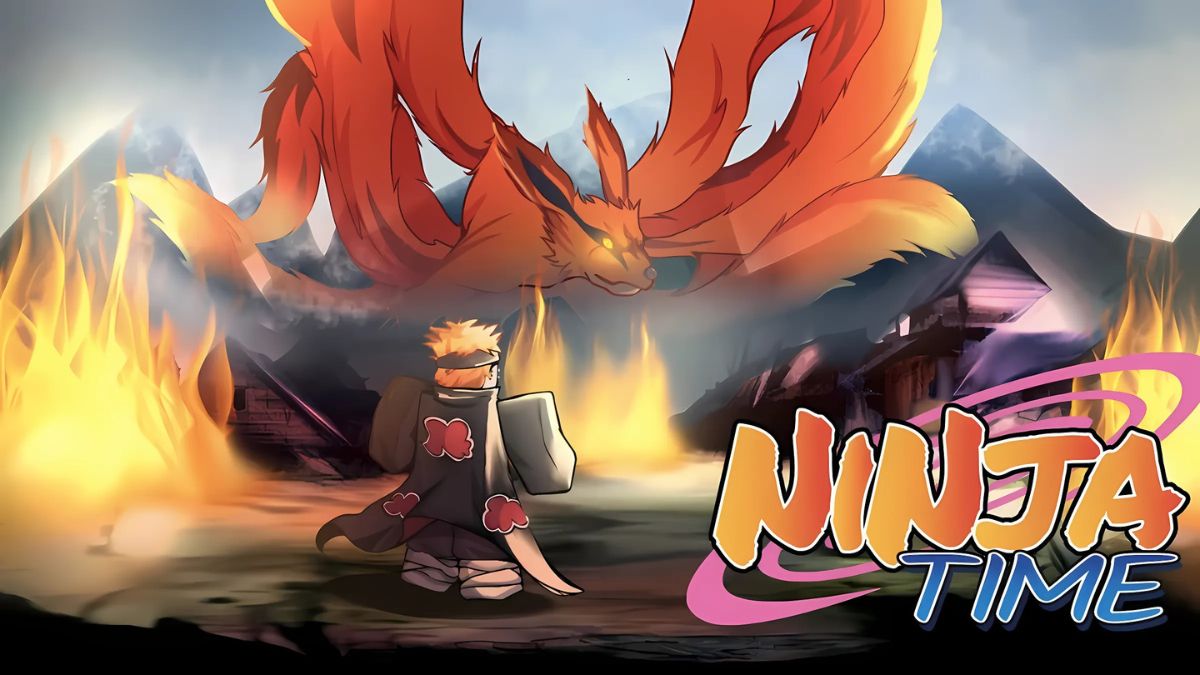
1. Ninja Time Becomes Interesting When Progress Stops Being Automatically Good
Most progression games train players to celebrate every upgrade. More damage is good, stronger abilities are good, better equipment is good, and additional resources should always push the character forward. Ninja Time becomes more complicated once players realize that improvement in one direction can quietly create weakness somewhere else. A build can become powerful while also becoming predictable, expensive to maintain, difficult to recover with, or too dependent on one ability.
This creates a different kind of progression pressure. New players usually invest in whatever produces the clearest immediate benefit. More offensive power feels satisfying because enemies disappear faster, so damage naturally attracts attention first. The problem appears when later encounters demand movement, patience, resource control, or the ability to survive long enough for cooldowns to return.
At that point, the build has not necessarily become weak. It has become incomplete.
That distinction matters because many players respond to difficulty by investing even more heavily in the same thing that already works. If damage carried the early game, they add more damage. If one ability solved most encounters, they continue designing everything around it. This can work until the game introduces situations where the original strength no longer solves the real problem.
Ninja Time rewards players who notice that moment early. The important question is not simply whether your character is stronger than yesterday. It is whether the new strength still matches the problems you are currently facing.
Progress is useful only when it remains relevant.
2. A Build Starts Becoming Personal When You Accept That It Cannot Be Excellent at Everything
One of the strongest aspects of Ninja Time is the way players gradually develop recognizable combat preferences. Some feel comfortable staying close to opponents and applying constant pressure. Others prefer range, mobility, patience, or the ability to control space before committing.
These differences matter because the best theoretical build is not automatically the best practical build.
A setup built around aggressive close combat can perform extremely well in the hands of someone who understands spacing and escape timing. Give the same setup to a player who hesitates during pressure and the result may be completely different. Likewise, a mobility focused build may look weaker on paper while producing better results for someone who survives through movement and careful positioning.
This is why blindly copying advanced builds often causes disappointment. Guides can explain strong combinations, efficient progression routes, and popular strategies, but they cannot completely account for how an individual player reacts during combat. A build that depends on precise timing may feel terrible to someone who prefers slower control. Another may produce excellent damage while forcing the player into positions they consistently misread.
Ninja Time becomes more rewarding when builds are treated as tools rather than rankings.
The goal should not be to create a character that wins every comparison on paper. It should be to create one whose strengths match the decisions you are actually good at making.
That sense of compatibility gives progression more identity. You are not merely equipping stronger options.
You are gradually deciding what kind of mistakes you are willing to live with.

3. Movement Often Saves More Progress Than Another Damage Upgrade
Damage is easy to notice because the feedback is immediate. An attack lands harder, an enemy loses more health, and the improvement is obvious. Movement is quieter.
Yet movement often determines whether the rest of the build is allowed to function.
Good positioning reduces unnecessary damage before defensive statistics even matter. Proper spacing makes cooldown management easier because players are not constantly forced into panic reactions. Understanding terrain can create escape routes or attack angles that would never exist if every fight were approached from the same position.
This becomes especially important against stronger opponents. A character with impressive damage can still lose quickly if every attack is committed from poor range or if the player has no plan once the initial pressure fails. A slightly weaker character with better movement can survive long enough to create several additional opportunities.
Beginners often learn this late because early encounters rarely punish movement mistakes severely enough. Stronger abilities compensate for bad positioning, and weaker enemies disappear before those habits become dangerous. Later content exposes them.
That is when the player realizes they were not only training a character.
They were also training habits.
Some of those habits are expensive to correct because they have been reinforced for hours. Players who always attack first may struggle to wait. Players who rely on one escape option may panic when it is unavailable. Movement mastery therefore becomes less about speed and more about creating enough space to make better decisions.
A strong build gives you tools.
Good movement gives you enough time to use them correctly.
4. Resource Management Becomes Difficult When Every Upgrade Looks Useful
Ninja Time constantly presents reasons to spend. A new ability appears promising, another upgrade improves immediate performance, and a different progression path suggests better long term potential. The problem is not that players lack worthwhile options.
There are often too many.
This creates a familiar trap. A player spreads resources across several ideas because each one seems useful individually. After enough time, the character has many partially developed systems but no clear strength.
The opposite mistake is equally dangerous. Some players commit too heavily to one path and refuse to change because too much has already been invested. Even when the build begins struggling, abandoning part of the strategy feels like admitting the previous resources were wasted.
That is where progression becomes psychological.
The smartest decision may be to stop investing in something that once worked.
This is difficult because players naturally want previous effort to remain valuable. They continue upgrading an ability because it already consumed time, not because the next upgrade is actually the best use of current resources.
Experienced players become more selective. They ask whether an investment changes what the character can do rather than whether the number simply becomes larger. Does it improve survivability? Does it solve a specific matchup? Does it reduce downtime? Does it create another useful option when the preferred strategy fails?
The best progression choices usually answer a current problem.
The worst ones are often made simply because an upgrade button exists.

5. Difficult Opponents Expose Habits Faster Than They Expose Weak Stats
When a fight goes badly, it is tempting to blame the build first. Damage feels too low, defenses seem insufficient, or the opponent appears to have better abilities. Sometimes that assessment is correct.
Other times, the real problem is repetition.
Players develop patterns without noticing them. They dodge in the same direction, open with the same attack, retreat after the same ability, and use cooldowns in nearly identical sequences. Against ordinary enemies, these patterns rarely matter. Against experienced opponents, predictability becomes a weakness.
This is where rivalries and repeated encounters become useful. Fighting the same skilled player several times can reveal more than defeating dozens of weaker enemies. Your preferred opening gets punished. Your escape route gets anticipated. The moment you normally become aggressive becomes obvious.
The solution is not always more power.
Sometimes the solution is becoming less readable.
That might mean delaying an attack, changing distance, refusing an obvious opportunity, or saving an ability for a moment when the opponent expects it to be unavailable.
Ninja Time becomes much deeper when combat is viewed this way. A build is only part of the equation. The habits surrounding that build determine how easily someone else can solve it.
Strong opponents do not merely test whether you are powerful enough.
They test whether you have become predictable while becoming powerful.
6. Social Play Changes Progression Because Other Players Become Benchmarks
Solo progression can create a comfortable illusion. You improve at your own pace, enemies become easier, and every milestone appears to confirm that the character is moving in the right direction.
Other players disrupt that certainty.
Someone with similar progression may move more efficiently, survive longer, or use an ability in a way you never considered. Another player may have weaker statistics but make better decisions during combat. Watching these differences creates a form of comparison that numbers alone cannot provide.
This is one reason communities, rivalries, mentorship, and group play matter. Players learn shortcuts through observation. They discover that a supposedly weak strategy works in the right hands or realize that an ability they considered essential can be avoided entirely.
Social comparison can also become unhealthy when players judge every part of progression against people with more time, better resources, or completely different goals. Ninja Time is at its best when other players function as information rather than as permanent pressure.
A rival can reveal weaknesses.
A mentor can shorten a learning curve.
A group can make difficult content more manageable.
Yet copying everything another player does can erase the reason personal builds are interesting in the first place.
The strongest social influence gives you better questions to ask about your own character.
It should not automatically give you someone else’s answers.

7. Late Game Progression Is Really About Removing Dependence
Early builds often work because one strength compensates for several weaknesses. A powerful ability handles damage. High mobility escapes bad situations. Strong defenses forgive positioning mistakes.
Late game pressure exposes how dependent the character has become on those advantages.
If one ability is unavailable, does the entire strategy collapse? If the preferred range cannot be maintained, is there another plan? If an opponent survives the opening sequence, can the build continue functioning without waiting helplessly for cooldowns?
These questions are more important than simply adding another layer of power.
A mature build should have options.
That does not mean becoming equally strong in every category. Specialization remains valuable because clear strengths create identity. The goal is to reduce the number of situations where one disrupted element causes everything else to fail.
This is where experienced players begin refining rather than expanding. A new upgrade matters because it covers a weakness. A different movement option is valuable because it creates another response. Resource efficiency becomes important because wasted investment limits flexibility later.
The character becomes less impressive in one obvious way and more reliable across difficult situations.
That transition can feel less exciting than unlocking a spectacular new power, but it represents a deeper kind of progression.
Early game strength asks how hard you can push your favorite strategy.
Late game mastery asks what happens when that strategy is taken away.
8. Ninja Time Is Worth Playing in 2026 If You Enjoy Correcting Your Own Decisions
Ninja Time is most satisfying for players who enjoy progression that creates questions instead of simply providing answers. Every improvement changes the character, but those changes also influence future weaknesses. A stronger offensive path may increase risk. A highly specialized build may become predictable. An efficient strategy can become obsolete when stronger opponents demand something different.
That constant need for adjustment gives the game longevity.
The combat does not remain interesting simply because abilities become more spectacular. It remains interesting because players gradually understand why certain habits fail. Movement, timing, spacing, cooldown control, resource allocation, and build compatibility become more important as obvious progression slows.
The weaknesses are closely connected to that structure. Grinding can still become repetitive, especially when resources or upgrades require extended farming. Balance differences may push players toward popular builds, reducing experimentation. Newcomers can also feel overwhelmed by systems that are easy to understand individually but difficult to prioritize together.
Players who want immediate power without much planning may find later progression frustrating. Ninja Time expects mistakes to have consequences, especially when resources are spent poorly or habits become deeply ingrained.
For the right audience, though, that is where the satisfaction comes from.
You do not simply watch a character become stronger.
You watch your own decisions become harder to punish.

Conclusion
Ninja Time works best when progression is treated as a series of commitments rather than a straight climb toward larger numbers. Every build choice creates strengths, but it also creates assumptions. You assume certain abilities will remain useful. You assume one combat style will continue working. You assume the resources spent today will still make sense several stages later.
The game becomes interesting when those assumptions fail.
A build that once felt perfect begins struggling. An opponent exposes a repeated habit. A resource investment stops providing meaningful value. A movement mistake reveals that damage was never the real problem.
Players who adapt continue improving.
Players who refuse to change often discover that more power only makes the same weaknesses more expensive.
This is why Ninja Time can feel rewarding even when progression becomes difficult. The most satisfying improvements are not always visible in statistics. Sometimes the biggest breakthrough is learning to wait before attacking, abandoning an inefficient upgrade path, changing a familiar movement habit, or admitting that a favorite build no longer fits the way you want to play.
Strength matters.
Adaptability decides how long that strength remains useful.
Frequently Asked Questions
Is Ninja Time worth playing in 2026?
Yes, particularly for players who enjoy anime inspired RPG progression, build experimentation, mobility, combat strategy, resource management, and long term character development. Players who dislike grinding or repeated optimization may find the experience less appealing.
What should beginners prioritize first?
Beginners should avoid investing entirely in offensive power. Mobility, survivability, cooldown management, and a clear understanding of how the preferred combat style works are equally important.
Should new players copy popular builds?
Popular builds can provide useful direction, but copying them blindly is risky. A strong build may depend on timing, positioning, or habits that do not match another player’s preferred style.
Why is movement so important?
Movement affects positioning, survival, spacing, escape options, and the ability to wait for cooldowns safely. Better movement can often create more practical value than a small increase in raw damage.
How should players spend resources efficiently?
Invest toward specific problems rather than upgrading everything equally. Ask whether an upgrade changes what the character can do, solves a weakness, or supports the long term direction of the build.
Do stronger abilities guarantee victory?
No. Powerful abilities help, but predictable timing, poor positioning, and weak resource management can make even strong builds easy to punish.
What is the biggest mistake experienced players make?
One common mistake is refusing to change a build because too much time has already been invested in it. Continuing to spend resources on a strategy that no longer works can create more problems than adapting earlier.
What gives Ninja Time long term replayability?
Replayability comes from experimenting with different builds, refining movement, learning matchups, improving resource efficiency, adapting to stronger opponents, and correcting weaknesses that only become visible after extended play. The long term challenge is not simply becoming powerful. It is building a character that remains useful when the game stops allowing your favorite strategy to solve everything.