


1. The Best Thing About GTA V Is How Easily You Can Forget What You Were Supposed to Be Doing

I was supposed to drive Franklin to a mission marker.

Nothing complicated. A few minutes across Los Santos, start the mission, continue the story.

Then I missed a turn.

A sports car passed in the opposite direction, so I stole it. That attracted the police. Escaping them pushed me onto a road I rarely used, which eventually climbed into the hills above the city. By the time the wanted level disappeared, sunset had turned the skyline orange and the mission marker was somewhere behind me.

I never went back that evening.

That sequence explains GTA V better than almost any scripted heist could. The game's greatest trick isn't simply giving players a huge map. Plenty of open worlds are enormous. What makes Los Santos different is how easily the space between objectives becomes more interesting than the objectives themselves.

Drive anywhere without a plan and something begins pulling at your attention. A dirt road disappears into the hills. A strange encounter appears beside the highway. An aircraft passes overhead. You spot a vehicle you suddenly decide you need, despite having absolutely no reason to own it. Twenty minutes later, the original plan has dissolved into a chain of decisions that would sound completely pointless if you tried explaining them afterward.

Yet those are often the sessions I remember.

Los Santos supports this kind of distraction because it rarely feels like scenery built only to connect mission locations. Downtown has a different rhythm from Vespucci. The expensive hills around Vinewood feel disconnected from the industrial edges of the city. Drive far enough north and traffic thins, buildings disappear, and the same game suddenly feels quieter. Sandy Shores isn't simply Los Santos with different textures. It carries a sense of neglect that changes how being there feels.

Even the roads contribute to that identity. I can navigate certain parts of Los Santos almost entirely from memory now, not because the game forced me to memorize them, but because hundreds of chases, crashes, shortcuts, and completely unnecessary drives gradually turned the map into familiar territory.

That may be GTA V's most impressive achievement in 2026.

I no longer think of Los Santos as a collection of missions.

I think of places where things happened.

A junction where a police chase went catastrophically wrong. A mountain road where I destroyed a car I had spent far too much money modifying. A rooftop I reached once and then spent half an hour trying to remember how. A stretch of coastline I drove along late at night simply because the radio station matched the weather perfectly.

None of those moments mattered to the story.

They mattered to me.

And more than a decade later, that remains the strongest reason to return. GTA V doesn't merely give you a city to complete.

It gives you somewhere to get distracted.

2. GTA V Is Strangely More Restrictive During Missions Than It Is Everywhere Else

There is a contradiction at the heart of GTA V that becomes more noticeable the longer you play. Outside missions, the game encourages experimentation. You can approach Los Santos from almost any direction, take whatever vehicle happens to be nearby, ignore roads completely, improvise escapes, and turn simple errands into ridiculous stories. Then a story mission begins, and suddenly the same world becomes far less tolerant of creativity.

Drive too far from the intended route and the mission may fail. Use the wrong vehicle, leave a character behind, or attempt a shortcut the designers did not expect, and the game often pulls you back toward a carefully controlled sequence. It is one of the strangest contrasts in GTA V because the sandbox teaches players to think freely while many missions quietly ask them to follow instructions.

That tension did not bother me as much when I first played the campaign. The spectacle was enough. Heists, shootouts, chases, and character switching created such strong momentum that I rarely questioned how tightly everything was choreographed. Returning years later, the limitations are easier to see. Modern open-world games have made players more sensitive to invisible boundaries, and GTA V occasionally reveals them at exactly the wrong moment.

Yet the restriction also explains why so many missions remain memorable. Rockstar controls pacing aggressively because it wants specific moments to land with cinematic precision. A getaway needs to reach a certain street before dialogue continues. A firefight needs enemies positioned in a particular way. A vehicle sequence needs the camera, music, and action to align.

The result is a campaign that often feels directed rather than truly systemic.

That is not necessarily a failure. In fact, some of GTA V's strongest set pieces depend on that control. The problem is that Los Santos outside those missions constantly proves how entertaining unpredictability can be. When the game gives you complete freedom, accidents become stories. When it removes that freedom, you sometimes become aware that you are performing the correct version of an event instead of discovering your own.

GTA V works because both approaches coexist.

But after all these years, the open world usually wins that argument.

3. Driving Is Not Just Transportation in GTA V. It Is the Way Los Santos Makes Sense

GTA V would be a very different game if driving were merely a practical way to move between objectives.

It is not.

Driving is how players learn Los Santos. It is how the city's scale becomes understandable, how neighborhoods develop identity, and how empty time between missions becomes part of the experience. You do not simply teleport from downtown to the desert. You watch the city thin around you. Traffic changes. Roads widen. Buildings disappear. The radio continues playing while the scenery slowly tells you that you have gone somewhere else.

This is why vehicle handling remains one of GTA V's most durable strengths. Cars are accessible enough that anyone can immediately enjoy them, but different categories still have distinct personalities. A lightweight sports car encourages reckless speed through city streets. A heavy truck changes how corners feel. Motorcycles turn traffic into a moving obstacle course, while off-road vehicles suddenly make hills and dirt tracks look like invitations.

Some of my favorite sessions have involved no meaningful objective at all. I would choose a car, set a vague destination somewhere on the opposite side of the map, and drive without using the most efficient route. That sounds like nothing, but GTA V understands that movement can be entertainment when the world surrounding it has enough texture.

The radio is a huge part of that experience. A song becomes associated with a particular road, weather condition, or time of day. Drive through Los Santos at night with the right station playing and the game temporarily stops feeling like a crime sandbox. It becomes a mood.

That is also why crashes matter more than they should. A missed corner can completely redirect a session. A collision with traffic may trigger an argument, a police response, or an impulsive decision to steal something faster. One tiny mistake can create ten minutes of unscripted chaos.

Driving ties all of GTA V's systems together because it sits between everything else.

Missions begin after drives. Police chases become driving challenges. Exploration happens through driving. Random events interrupt driving. Even boredom often leads to driving somewhere just to see what happens.

Los Santos feels large because you travel through it.

More importantly, it feels familiar because you keep doing it.

4. Michael, Franklin, and Trevor Make Los Santos Feel Like Three Different Cities at Once

GTA V’s three-character structure is easy to remember as a technical gimmick, but its real strength is perspective. Michael, Franklin, and Trevor do not simply offer different abilities. They change what Los Santos means depending on who you are controlling.

Michael moves through wealth, boredom, family tension, and the kind of success that has already started to rot from the inside. His Los Santos is expensive homes, therapy sessions, old regrets, and the uncomfortable realization that getting everything you wanted does not guarantee satisfaction. Franklin sees the same city from a completely different angle. For him, Los Santos still represents upward movement. He wants distance from the life around him, but the city constantly reminds him how difficult that separation can be.

Then there is Trevor.

Trevor breaks almost every sense of stability the other two characters create. Switching to him can feel like entering another version of the game entirely. The city becomes less structured, the desert becomes more important, and normal social behavior suddenly feels optional. Some of the funniest transitions in GTA V happen because the game drops you into whatever situation Trevor has somehow created while you were away.

What makes the trio work is contrast. Michael is already inside the world Franklin wants to enter, while Trevor exists almost outside the rules both of them still pretend to respect. Their relationships create tension because they represent different forms of ambition, failure, loyalty, and self-deception.

Character switching also changes pacing beautifully. A mission can move between locations and viewpoints without feeling like a traditional cutscene transition. During larger sequences, swapping characters turns action into something closer to editing a film in real time.

The system is not perfect. Some character arcs feel stronger than others, and the campaign occasionally uses Trevor’s unpredictability as an easy shortcut to chaos. Still, the three-protagonist structure remains one of GTA V’s most distinctive ideas.

Los Santos feels larger because no single character owns it.

Each of them reveals a different version of the same place.

5. The Most Memorable GTA V Moments Usually Begin With Something Going Wrong

GTA V is full of carefully designed set pieces, but many of the stories players remember most were never planned.

A car flips at the wrong angle.

A civilian panics.

A police officer gets involved.

Someone fires a weapon.

Five minutes later, helicopters are overhead and the original objective has been completely forgotten.

This ability to turn tiny accidents into escalating chaos is where GTA V still feels remarkably alive. Its systems are simple enough individually, but they interact in ways that create unexpected outcomes. Traffic, police response, pedestrians, vehicles, physics, weapons, weather, and terrain can combine into situations that feel strangely personal even though none were scripted specifically for you.

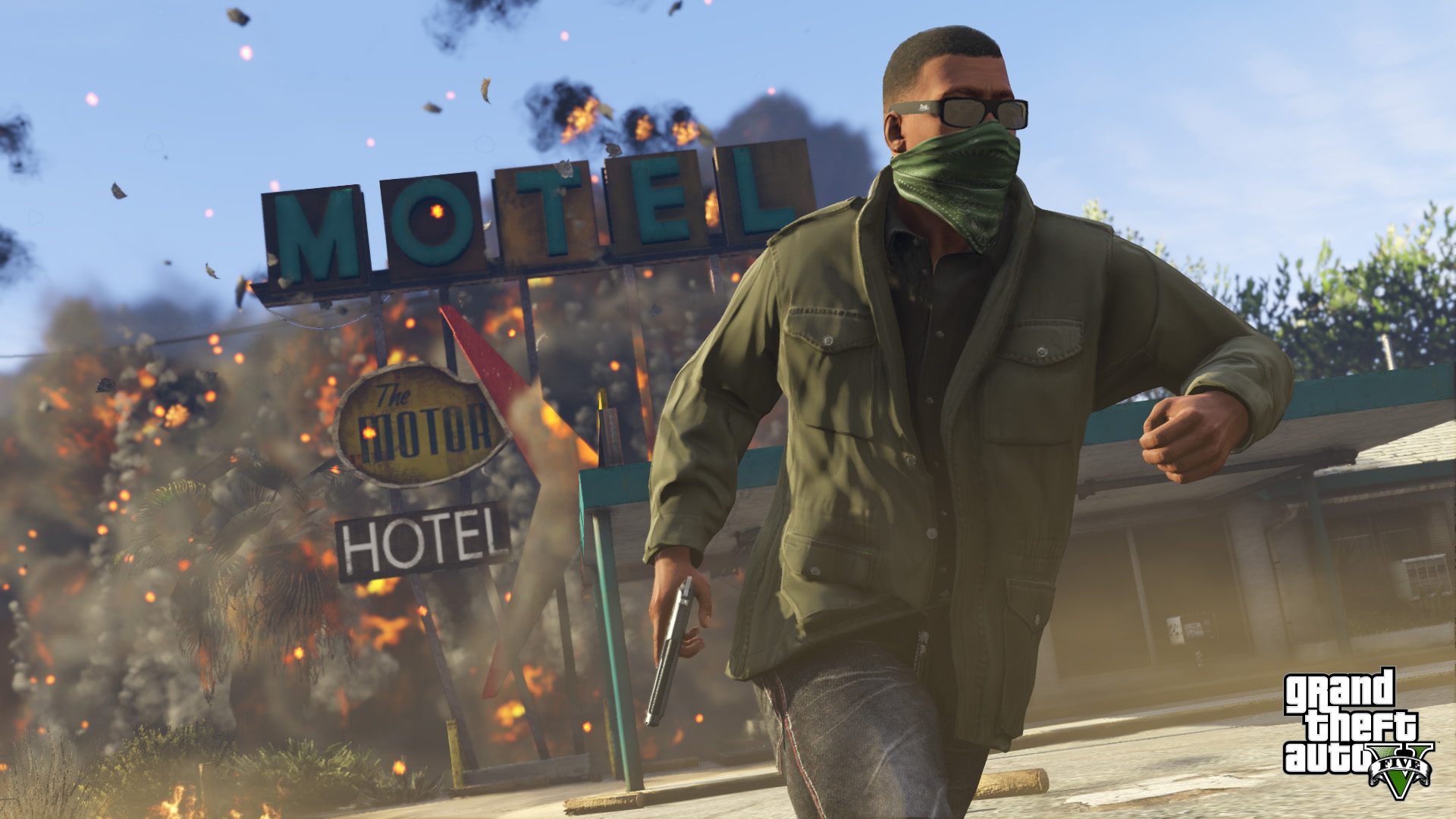
I once started with the completely ordinary intention of delivering a vehicle. A collision sent the car into a gas station, the explosion attracted police, the escape pushed me into the hills, and what should have been a routine task became a long chase involving several stolen vehicles and a final desperate jump down a slope I had no business attempting.

The story itself sounds ridiculous.

That is exactly why it worked.

GTA V does not need every system to be deep because the combination creates variety. A traffic jam becomes an obstacle. A missed turn becomes an escape route. A random helicopter becomes an opportunity or a disaster depending on what happens next.

Failure is often part of the entertainment rather than something that needs to be avoided. The funniest sessions are frequently the ones where control disappears completely and you begin improvising around increasingly poor decisions.

That is a difficult quality to design deliberately.

Many open-world games give players freedom, but freedom alone does not guarantee interesting outcomes. GTA V succeeds because Los Santos reacts just enough to make bad choices generate consequences without becoming completely unpredictable.

The best moments often begin with the sentence:

“This was not supposed to happen.”

And then they get better from there.

6. GTA V Still Feels Modern in Motion, but Some of Its Systems Finally Show Their Age

Returning to GTA V in 2026 creates an interesting contradiction. The game still moves with confidence. Driving remains responsive, the city still feels busy, and switching between characters continues to give the campaign a rhythm that many newer open-world games struggle to match. Yet the longer you play, the more certain systems begin revealing how much game design has changed since its original release.

Combat is the clearest example. Gunfights are functional and often cinematic, but the shooting itself can feel less precise than modern action games. Enemies frequently become targets within a familiar cover system rather than unpredictable threats, and some encounters rely more on volume than tactical depth. It still works because missions are paced well, but the mechanics rarely become the reason you want to replay a firefight.

Movement can also feel heavier than expected, especially indoors or in tight spaces. Small interactions sometimes require more effort than they should, and certain animations prioritize realism over immediate control. These details were easier to overlook years ago. Today, they stand out because players are accustomed to smoother traversal and more flexible interaction systems.

The mission design has aged unevenly too. Some sequences remain excellent because spectacle and character writing carry them forward. Others reveal how often the game expects players to follow a very specific route. Fail a hidden condition and the illusion of freedom disappears immediately.

Even the economy can feel strangely disconnected in the single-player campaign. Money matters intensely during some parts of the story, then eventually becomes less meaningful once major purchases stop changing how you actually play.

None of these issues make GTA V feel obsolete.

They make it feel historical.

You can see the design language of an earlier generation underneath a world that still looks and behaves convincingly. The surprising part is how rarely those older systems destroy the experience. GTA V survives them because the larger structure remains strong.

You may notice the age in a firefight.

Then you step outside, steal a car, hear the radio start, and forget about it ten seconds later.

7. GTA Online Changed GTA V From a Finished Game Into a Place People Kept Living In

The original GTA V campaign has a clear shape. It introduces three protagonists, builds toward increasingly ambitious crimes, resolves major conflicts, and eventually reaches an ending.

GTA Online did something entirely different.

It refused to let Los Santos end.

Over time, the city became less like the setting of one crime story and more like a platform where players created thousands of their own. Racing crews, heist groups, collectors, competitive players, business grinders, roleplayers, and people who simply wanted to drive around with friends all began using the same map for completely different reasons.

That shift changed how GTA V was remembered.

For some players, Michael, Franklin, and Trevor remain the heart of the experience. For others, Los Santos is primarily associated with a custom character, a favorite vehicle collection, a business empire, or a group of friends who spent years causing completely unnecessary problems together.

The multiplayer side also expanded the scale of what players could pursue. New vehicles, properties, businesses, cooperative activities, competitive modes, and roleplaying communities turned progression into something far larger than the original campaign ever attempted.

That growth came with complications. The economy became increasingly demanding, progression could feel grind-heavy, and the sheer amount of accumulated content made the experience intimidating for newcomers. Not every addition improved the game equally, and the gap between casual players and long-term veterans became increasingly visible.

Still, the cultural impact is difficult to ignore.

GTA Online demonstrated how powerful a detailed open world becomes when players are allowed to treat it as a social space rather than a sequence of objectives. Los Santos stopped being a city Rockstar asked people to visit.

It became a place communities occupied.

That distinction explains much of GTA V’s extraordinary longevity. The map did not need to change completely because the people inside it kept changing what it was used for.

A street that once existed only as part of a campaign mission could later become the site of a race, a roleplay scene, a business delivery, or a ridiculous chase involving several friends and absolutely no sensible plan.

The geography stayed familiar.

The stories never stopped changing.

8. Is GTA V Still Worth Playing in 2026? Yes, but Its Appeal Has Changed With Time

When GTA V first arrived, much of its impact came from scale. Los Santos felt enormous, the three-character structure was unusually ambitious, and the freedom to move between story missions and completely unscripted chaos made the game feel almost impossible to exhaust. In 2026, those qualities are no longer unique on their own. Open worlds have grown larger, visual technology has advanced, and newer games have introduced smoother combat, more flexible traversal, and more reactive mission design. Yet GTA V has survived that change remarkably well because its appeal was never based entirely on technical superiority.

The strongest reason to return today is the relationship players develop with Los Santos itself. After enough time, the city becomes familiar without becoming completely predictable. You remember which roads are enjoyable at night, where traffic usually becomes annoying, which mountain routes are worth taking simply for the view, and how quickly one careless collision can turn a quiet drive into a five-star police chase. That familiarity creates comfort, but the sandbox systems still leave enough room for accidents and unexpected situations to make each session feel slightly different. Few open worlds remain this enjoyable even when the player has no meaningful objective.

GTA V is also one of those rare games where spending an hour doing almost nothing productive can still feel worthwhile. You can ignore missions, choose a car for no particular reason, switch on the radio, and drive across the map without feeling that the session was wasted. The world itself provides enough atmosphere and variety to make movement entertaining. A trip from downtown Los Santos to Blaine County naturally changes scenery, traffic, weather, and mood, creating a sense of travel that many larger open worlds still struggle to reproduce convincingly.

That does not mean every part of GTA V has aged gracefully. Gunplay feels less precise than modern action games, character movement can be heavy in tight spaces, and several missions remain surprisingly restrictive compared with the freedom available outside them. Certain side activities also feel dated, while the single-player economy loses much of its importance once money stops meaningfully changing how you play. These weaknesses are much easier to notice now than they were during the game's original release.

Even so, GTA V remains worth playing in 2026 because its individual systems still combine into something unusually cohesive. Driving, radio stations, environmental detail, character switching, spontaneous police chases, side activities, and random distractions continually feed into one another. The game does not need every mechanic to be modern because the overall experience still creates curiosity. You may begin a session intending to complete one mission and finish two hours later somewhere in the desert, driving a stolen vehicle while trying to remember what you originally planned to do. That ability to make ordinary play sessions drift naturally into unexpected stories remains one of GTA V's greatest strengths.

Conclusion

GTA V has spent more than a decade being measured through enormous numbers, from sales and player counts to years of updates and the continued growth of GTA Online. Those achievements explain its commercial success, but they do not fully explain why the game remains so easy to revisit. The simpler reason is that Los Santos became familiar without ever becoming completely lifeless. Players know its roads, neighborhoods, shortcuts, and landmarks, yet the systems operating inside that world can still produce situations they did not plan.

The game is at its best when structure and unpredictability collide. Story missions provide memorable set pieces and character-driven moments, while the open world gives players enough freedom to create experiences that often become more memorable than the scripted content. Michael, Franklin, and Trevor allow the city to be viewed from three very different perspectives, while driving gives the entire experience a rhythm that connects missions, exploration, police chases, and random encounters. GTA Online later expanded that foundation into a long-running social space where players could create entirely different stories inside the same familiar map.

Time has inevitably exposed weaknesses. Combat no longer feels especially refined, some mission structures are rigid, and several systems clearly belong to an earlier generation of open-world design. Yet those shortcomings rarely destroy what GTA V does best because the game was never dependent on one perfect mechanic. Its strength comes from how dozens of relatively simple systems interact to make Los Santos feel like somewhere events can happen rather than merely somewhere objectives are placed.

That is ultimately why GTA V remains memorable in 2026. You can finish the campaign, complete the biggest heists, buy expensive vehicles, memorize large sections of the map, and spend hundreds of hours exploring both single-player and GTA Online. Still, it only takes one evening, one stolen car, one good radio track, and one missed turn for Los Santos to become interesting again. Few games this old can still make an ordinary session disappear so easily.

Frequently Asked Questions

Is GTA V still worth playing in 2026?

Yes. GTA V shows its age in areas such as combat, movement, and some mission design, but Los Santos remains one of the most enjoyable open worlds to explore. The combination of driving, environmental detail, memorable characters, sandbox freedom, spontaneous encounters, and GTA Online still gives the game considerable value for both new and returning players.

Has GTA V aged badly compared with modern open-world games?

Only in certain areas. Shooting mechanics are less precise than many newer action games, character movement can feel heavy, and some missions restrict player freedom more than modern players may expect. On the other hand, driving, world design, environmental variety, radio integration, and the game's ability to generate unscripted chaos have aged remarkably well.

Is GTA V worth playing only for the main story?

No. The campaign is an important part of the experience, particularly because of Michael, Franklin, and Trevor, but much of GTA V's lasting appeal comes from what happens outside missions. Exploring Los Santos, driving without a destination, discovering random events, experimenting with vehicles, escaping police, and getting distracted by unexpected situations can be just as memorable as the scripted story.

Which protagonist is the best in GTA V?

There is no single answer because each protagonist serves a different purpose. Michael offers a story about wealth, dissatisfaction, family problems, and the consequences of an old criminal life. Franklin represents ambition and the desire to move beyond his circumstances, while Trevor introduces unpredictability and exposes the darker, more chaotic side of the game's world. The strength of the campaign comes from how these three perspectives interact rather than from one character completely dominating the story.

Why is driving so important to the GTA V experience?

Driving is more than transportation because it connects almost every major part of the game. Players learn Los Santos through its roads, experience the transition between different regions from behind the wheel, discover random events while traveling, and frequently turn simple journeys into unexpected police chases or side adventures. Radio stations also give driving a strong sense of atmosphere, making even uneventful trips across the map surprisingly memorable.

Do I need to play GTA Online to enjoy GTA V?

No. The single-player campaign remains a complete experience with its own story, characters, missions, side activities, and open-world exploration. GTA Online dramatically expands longevity through multiplayer heists, businesses, vehicles, competitive activities, cooperative content, and community-driven experiences, but it is not required to appreciate what makes GTA V's world enjoyable.

Why has GTA V remained popular for so many years?

Its longevity comes from several strengths working together rather than one single feature. Los Santos is memorable and easy to navigate, driving remains enjoyable, the sandbox systems constantly generate unexpected situations, the campaign offers distinctive characters, and GTA Online transformed the city into a persistent multiplayer environment. The game also gives players enough freedom to create their own entertainment instead of depending entirely on new scripted content.

What makes Los Santos different from other open-world cities?

Los Santos feels convincing because its different regions have distinct identities while still belonging naturally to the same world. Downtown, Vinewood, Vespucci Beach, industrial districts, Sandy Shores, mountain roads, desert areas, and the coastline all create different moods. Over time, players also develop personal memories tied to specific roads and locations, which makes the map feel less like a designed level and more like a place they genuinely know.